Ask your data: will conversational AI replace classic dashboards?
The 2026 trend is clear - instead of clicking through reports, companies ask their data in natural language. We explain how conversational AI works, what it changes and whether it will replace dashboards.
Richard Böhmer, MSc
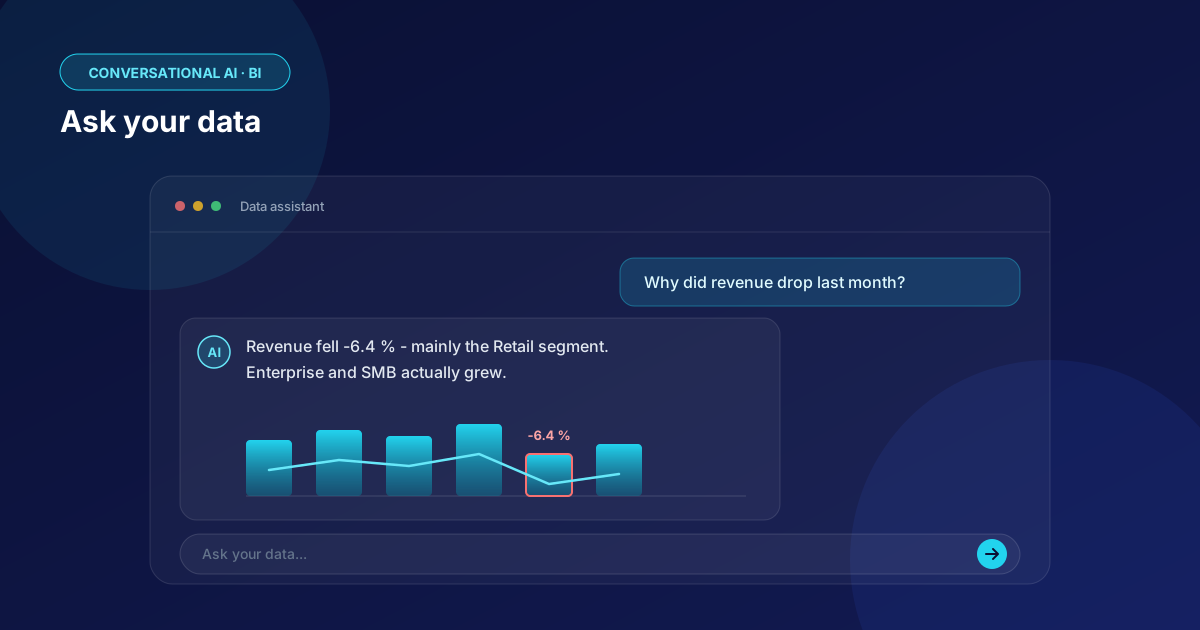
Imagine that instead of hunting for the right report, you simply type: “Why did revenue drop last month?” - and within seconds you get an answer, complete with a chart and an explanation. No clicking through ten filters, no waiting for an analyst. This isn’t sci-fi - it’s the hottest trend in data in 2026: conversational analytics, or in plain terms “ask your data”.
What is conversational analytics
A classic dashboard is great for what you know upfront you want to track - revenue, margins, conversions. The problem arises when a question comes up that the dashboard has no ready view for. That’s when you wait for an analyst or dig through spreadsheets.
Conversational analytics skips that step. You put an AI layer over your data that understands natural language - you ask like you’d ask a person, and it answers with numbers from your systems, often with a chart and context.
How it works
- Question - you type (or say) a question in plain language: “Which services generate the highest margin last quarter?”
- Translation into a query - the AI turns the question into a query over your data model (SQL, a semantic layer).
- Answer with context - you get a number, plus a chart and an explanation of “what it’s based on”.
- Follow-up question - you keep asking (“and how was it last year?”), exactly like in a conversation.
The key is that the answer is verifiable - good conversational AI shows which data and definitions it relied on, not “trust me”.
What it actually changes
- Speed - from question to answer in seconds, not days of waiting for a report.
- Data literacy - even a non-technical person (a salesperson, HR, the owner) can “reach into” the data without knowing Power BI.
- Less work for analysts - they stop being a “service window” for ad-hoc questions and do higher-value work.
- Decisions in context - the answer arrives when you need it, not a week later.
Will it replace dashboards? Not quite
The headline is deliberately provocative. The reality is more sober: conversational AI won’t replace dashboards, it will complement them.
- A dashboard is ideal for monitoring - what you watch every day, at a glance.
- Conversational AI is ideal for exploration - one-off and unexpected questions, the “why” and the “what if”.
The best companies will have both: overview dashboards for key numbers and an AI layer for everything else. If you’re just starting and want to understand what dashboards are even meant to solve, see What is business intelligence.
What it all rests on (and why it isn’t a magic button)
This is the part AI vendors like to skip. Conversational AI is only as good as the data beneath it:
- A solid data model - unified metric definitions. If “revenue” means three different things across three systems, the AI will answer confusingly. That’s why a proper data warehouse matters.
- A semantic layer - the AI has to know what a “customer”, “margin” or “active user” means in your context.
- Data quality - the old “garbage in, garbage out” applies; more in Data quality: why you don’t trust it.
- Access rights and security - everyone should see only what they’re allowed to, and queries must be auditable.
In other words: conversational AI isn’t a substitute for order in your data - it’s the cherry on top of a well-built data foundation.
A Slovak example that it can be done well
This isn’t just a Silicon Valley topic. A nice example from Slovakia is AskData - an AI analytics layer that connects directly to source systems and lets you ask your data in natural language, with a focus on security (read-only access, access rights, auditability) and explainable answers. It’s a good illustration of where this segment is heading - and that it can be built for ordinary companies, not just corporations.
We described the same “answers from your data with a link to the source” principle in our article on the AI chatbot over your documents (RAG) - conversational analytics is its cousin, only it works with numbers instead of documents.
What to watch out for
- Accuracy and trust - an AI that occasionally answers confidently wrong is worse than none. It needs testing and a clear “I don’t know”.
- Don’t start with AI, start with data - without order under the hood, it’s expensive theatre.
- Measure the benefit - how many questions get handled without an analyst, how much time is saved.
Want to ask your data in natural language one day? The foundation is a solid data model and an AI layer on top of it. Check out our data analytics and AI projects, or get in touch - on a consultation we’ll go through what makes sense for your company.