AI-ready architecture: what a company should prepare before deploying AI
Buying an AI model is not enough. Learn how to prepare company data, access rights and systems so AI can deliver reliable, measurable results.
Richard Böhmer, MSc
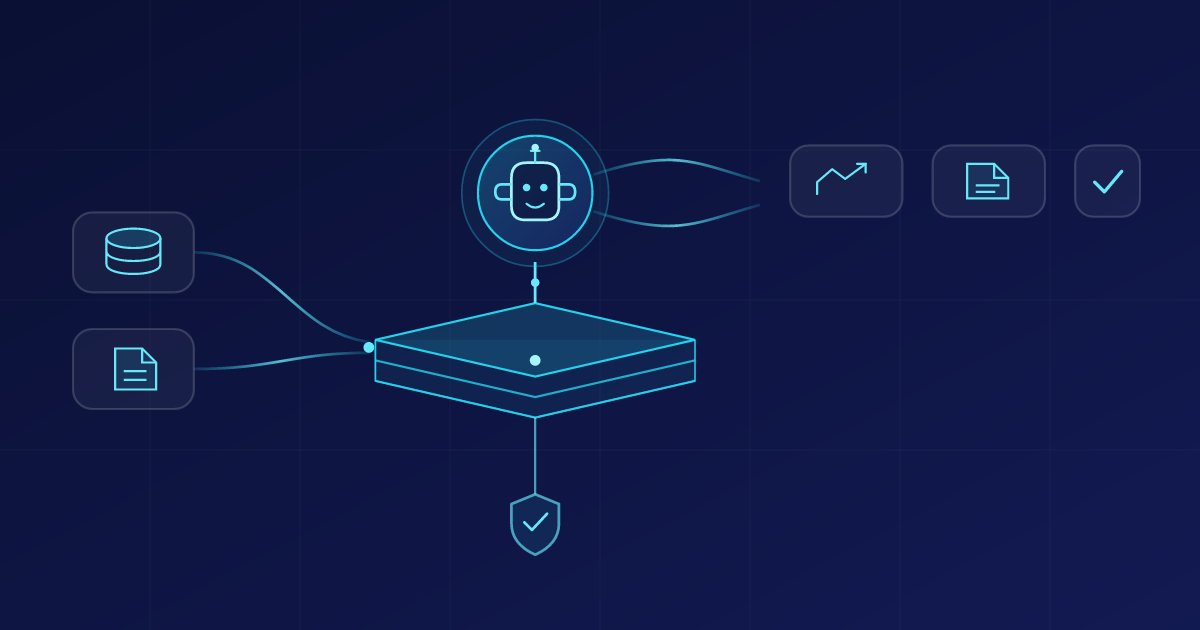
A company picks a language model, launches a pilot and waits for results. Then it discovers that documents are out of date, the same metric has a different definition in each system, and the AI cannot tell which data a user is allowed to access. An AI-ready architecture helps prepare these foundations before a wider rollout.
It does not mean building one huge platform or moving every data source to the cloud. It means designing data, permissions and integrations so a specific AI use case can safely use the right information and its results can be verified.
What AI-ready architecture means
It is a set of layers and rules connecting company data sources to an AI application. For each use case, it should answer four questions:
- Where does the AI get its information?
- Who is allowed to access it?
- How will we verify an answer or action?
- Who owns operations, costs and changes?
If you cannot answer these questions, buying a more powerful model will not solve the problem.
Six foundations to prepare
1. Choose a specific use case
Start with the problem, not the technology. “We want AI” is too broad. “Reduce time spent finding answers in service manuals” or “let leadership ask about margin by product” already defines the data and controls you need.
2. Map data sources and owners
Find where information originates - in an ERP, CRM, data warehouse, SharePoint, documents or internal applications. For each source, identify its owner, sensitivity, freshness and access method. You do not need to connect everything, only what the selected use case needs.
3. Make data quality and meaning clear
AI needs more than accessible data; it needs understandable context. For questions about numbers, define terms such as “revenue”, “active customer” and “margin” consistently. For documents, deal with duplicates, outdated versions and source traceability. Read more in You have data but don’t trust it?.
4. Carry access and security rules through
An assistant must not expose information a user could not access in the original system. Plan authentication, role-based access, sensitive-data rules, logging and incident handling. Specific requirements depend on the product, provider and configuration, so verify them before the pilot.
5. Choose the architecture for the task
Not every AI application needs the same approach:
| Use case | What the AI needs | Typical approach |
|---|---|---|
| Questions about policies and manuals | Document retrieval and source links | RAG |
| Questions about revenue, margin or stock | Reliable data model and metric definitions | Conversational analytics |
| Taking an action in a CRM or ERP | Approved tools, controls and human approval | AI agent or integration |
We explain RAG in more detail in AI chatbots over company documents. For analytics questions, AskData may be a fit.
6. Plan testing and operations
Before launch, prepare representative questions and expected answers. Measure accuracy, unsupported answers, response time, cost and cases escalated to a person. Decide who will review changes to data, models and permissions after launch.
A practical pre-pilot checklist
- Do we have one clear, recurring problem to solve?
- Do we know which data sources are needed and who owns them?
- Is the data fresh enough and consistently defined?
- Will the solution preserve user permissions from source systems?
- Can we test answer quality on realistic examples?
- Do we have a pilot owner and a way to measure value and cost?
If you cannot answer one of these questions yet, it does not have to stop the project. It tells you what to address first.
Start with a small pilot, not a major rebuild
An AI-ready architecture is not built all at once. Choose one area, prepare the required data and rules, test the solution with users, and expand only after validating its value. Sometimes it is enough to improve access to an existing data warehouse; in other cases, you may need an integration or need to clean up a specific set of documents.
If you are planning AI at a broader scale, we can help with data strategy, the data foundation and AI integration. In an initial consultation, we will choose a pilot based on your processes and data - not whichever tool is making the most noise.
Want to find out whether your data and systems are ready for AI? Get in touch and we can identify the first practical step together.